Makalu Base Camp Trek Guide: Route, Cost, Itinerary & Essential Travel Tips
Nepal is home to some of the world’s most iconic trekking routes, but beyond the busy trails of Everest and Annapurna lies a hidden Himalayan adventure that remains raw, remote, and incredibly rewarding. The Makalu Base Camp Trek is one of those rare journeys where nature still feels untouched and the mountains dominate every horizon.
This trek leads deep into eastern Nepal toward the base of Mount Makalu, the fifth-highest mountain in the world at 8,485 meters. Along the way, trekkers pass through isolated villages, dense forests, alpine valleys, glacier landscapes, and the breathtaking Barun Valley. Unlike commercial trekking routes filled with crowds and luxury lodges, the Makalu region offers solitude, authenticity, and a true wilderness experience.
For trekkers searching for a more adventurous side of Nepal, makalu base camp trekking combines dramatic mountain scenery with rich biodiversity and cultural depth. The journey is physically demanding, yet the reward is an unforgettable Himalayan experience far from the usual tourist trail.
Overview of the Makalu Base Camp Trek
The Makalu Base Camp Trek is located inside the Makalu Barun National Park in eastern Nepal. This protected region is famous for its exceptional biodiversity, ranging from tropical forests in lower elevations to icy Himalayan terrain near the base camp.
The trek usually begins with a domestic flight from Kathmandu to Tumlingtar, followed by a drive toward Seduwa, where the trekking route officially starts. From there, the trail climbs gradually through remote settlements, forests, ridges, and river valleys before reaching the spectacular base camp.
What makes the mount makalu trek truly unique is the changing landscape. Within just a few days, trekkers move from green hills and terraced farms to barren alpine terrain surrounded by snow-covered peaks.
The region is also significantly quieter compared to Nepal’s more famous trekking destinations. Many trekkers spend entire days walking through peaceful trails without encountering large groups, which adds to the sense of exploration and adventure.
Why Choose the Makalu Trek?
There are many trekking destinations in Nepal, but the makalu trek offers an entirely different atmosphere compared to mainstream Himalayan routes.
A Less Crowded Himalayan Experience
One of the biggest attractions of the trek is its remoteness. Unlike Everest Base Camp or Annapurna Circuit, the Makalu region receives far fewer visitors. This creates a more peaceful trekking environment with quieter trails and authentic local interactions.
Incredible Mountain Views
The trail offers stunning views of Mount Makalu along with neighboring Himalayan giants including Chamlang, Baruntse, and even distant Everest peaks on clear days.
Rich Natural Diversity
The Makalu Barun region contains diverse ecosystems and rare wildlife species. Trekkers may encounter Himalayan thar, musk deer, colorful pheasants, and, in very rare cases, signs of snow leopards.
Challenging Yet Rewarding
The trek is physically demanding, making it ideal for adventure seekers who want something beyond Nepal’s standard trekking routes.
Makalu Base Camp Trek Route
The classic makalu base camp trek route starts after flying from Kathmandu to Tumlingtar. From Tumlingtar, travelers drive toward Seduwa before beginning the trek on foot.
The route generally passes through:
- Seduwa
- Tashigaon
- Kauma
- Mumbuk
- Nehe Kharka
- Shershon
- Makalu Base Camp
As the trek progresses, the landscape changes dramatically. Lower sections include terraced farmland and forests, while higher regions become rocky, glacial, and alpine in nature.
The route through the Barun Valley is considered one of the most scenic sections of the entire journey. Massive cliffs, waterfalls, and glacier-fed rivers create an unforgettable Himalayan atmosphere.
Detailed Makalu Base Camp Trek Itinerary
Day 01: Arrival in Kathmandu (1,400m)
Arrival in Kathmandu followed by hotel transfer and trek briefing.
Day 02: Preparation Day in Kathmandu
A free day for sightseeing, permit arrangements, and final trekking preparations.
Day 03: Fly to Tumlingtar and Drive to Seduwa (1,500m)
A scenic flight to eastern Nepal followed by a countryside drive into the Makalu region.
Day 04: Trek from Seduwa to Tashigaon (2,050m)
The trail passes through forests and traditional villages with gradual elevation gain.
Day 05: Trek from Tashigaon to Kauma (3,470m)
A challenging uphill climb through dense forests and mountain ridges.
Day 06: Trek from Kauma to Mumbuk (3,500m)
Cross scenic passes before descending into rhododendron and fir forests.
Day 07: Trek from Mumbuk to Nehe Kharka (3,600m)
Enter the beautiful Barun Valley with incredible river and mountain scenery.
Day 08: Trek from Nehe Kharka to Shershon (4,720m)
The landscape becomes increasingly rugged and alpine as the altitude rises.
Day 09: Trek to Makalu Base Camp (4,853m)
Reach the stunning makalu base camp, surrounded by glaciers and towering Himalayan peaks.
Day 10: Exploration Day at Base Camp
Acclimatization hikes and exploration around the glacier basin.
Day 11: Trek to Shipton-La Camp (4,261m)
Begin descending through rocky alpine terrain.
Day 12: Trek to Seduwa (1,700m)
A long descent through forests and mountain villages.
Day 13: Trek from Seduwa to Mure (1,980m)
Continue descending through scenic landscapes and rural settlements.
Day 14: Drive to Tumlingtar (1,700m)
Drive back toward Tumlingtar for the return flight.
Day 15: Fly Back to Kathmandu
Morning flight back to Kathmandu with free time afterward.
Day 16: Departure
Transfer to the airport for final departure.
Makalu Base Camp Trek Difficulty
The Makalu Base Camp Trek is considered a challenging trek due to its remoteness, long trekking days, and changing terrain.
Trekkers should expect:
- Steep uphill climbs
- Rocky and uneven trails
- High altitude conditions
- Long walking hours
- Limited facilities in remote areas
This trek is best suited for individuals with good physical fitness and previous trekking experience.
Compared to more commercial trekking regions, the Makalu area has fewer facilities and less infrastructure, which makes preparation even more important.
Makalu Base Camp Altitude and Acclimatization
Understanding the makalu base camp altitude is essential before planning the journey.
The highest point of the trek reaches approximately 4,853 meters above sea level. At this elevation, altitude sickness becomes a real concern.
Makalu Base Camp Height
The official makalu base camp height is approximately 4,853 meters.
Acclimatization Tips
To reduce the risk of altitude sickness:
- Walk at a steady pace
- Stay hydrated
- Eat properly
- Avoid alcohol
- Take acclimatization seriously
- Descend if symptoms worsen
Even experienced trekkers can experience altitude-related problems, so proper acclimatization should never be ignored.
Makalu Base Camp Trek Cost
The total makalu base camp trek cost varies depending on trekking style, guide services, transportation, and season.
Major expenses include:
- Domestic flights
- Transportation
- Trekking permits
- Guide and porter fees
- Accommodation
- Meals
- Travel insurance
Because the region is remote, transportation and logistics are often more expensive than in popular trekking regions.
Barun Valley Trek Cost
The barun valley trek cost can also vary depending on itinerary length and whether camping support is included in higher sections.
Trekkers choosing organized packages typically spend more but benefit from better logistics and support.
Permits Required for Makalu Base Camp Trekking
Several permits are required for makalu base camp trekking.
These usually include:
- Makalu Barun National Park Entry Permit
- Restricted Area Permit (depending on route)
- TIMS Card if applicable
Permit requirements may change, so checking updated regulations before traveling is important.
Accommodation and Tea House Experience
Accommodation along the trail is basic but improving gradually each year.
Makalu Base Camp Tea House Trek
A makalu base camp tea house trek allows trekkers to stay in small local lodges rather than carrying full camping equipment.
Tea houses generally offer:
- Shared twin rooms
- Simple beds
- Local meals
- Dining areas
- Limited charging facilities
Higher elevations often have fewer facilities and simpler conditions compared to lower villages.
Food During the Trek
Food options become more limited at higher elevations, but trekkers can still find warm and filling meals throughout most of the route.
Common meals include:
- Dal Bhat
- Fried rice
- Noodles
- Potato dishes
- Soups
- Tibetan bread
- Tea and coffee
Dal Bhat remains the most popular trekking meal because it provides energy and is usually refillable in many lodges.
Best Time for the Makalu Base Camp Trek
Choosing the right season can greatly improve the trekking experience.
Spring Season (March to May)
Spring is one of the best times for makalu trekking. Forests bloom with rhododendrons while temperatures remain comfortable.
Autumn Season (September to November)
Autumn provides stable weather, dry trails, and excellent mountain visibility.
Winter Season
Winter trekking is possible, but temperatures become extremely cold at higher elevations.
Monsoon Season
Heavy rainfall and slippery trails make monsoon less favorable for trekking in this region.
Makalu Base Camp Trek Solo Travel
A makalu base camp trek solo adventure is possible for experienced trekkers, but it comes with challenges.
The region is remote and less developed, which means:
- Limited communication
- Fewer trekkers on the trail
- Difficult rescue logistics
- Unpredictable weather conditions
For safety reasons, many trekkers choose to hire local guides or join organized groups.
Makalu Trekking Map and Geography
A detailed makalu trekking map helps trekkers understand the geography and elevation changes throughout the route.
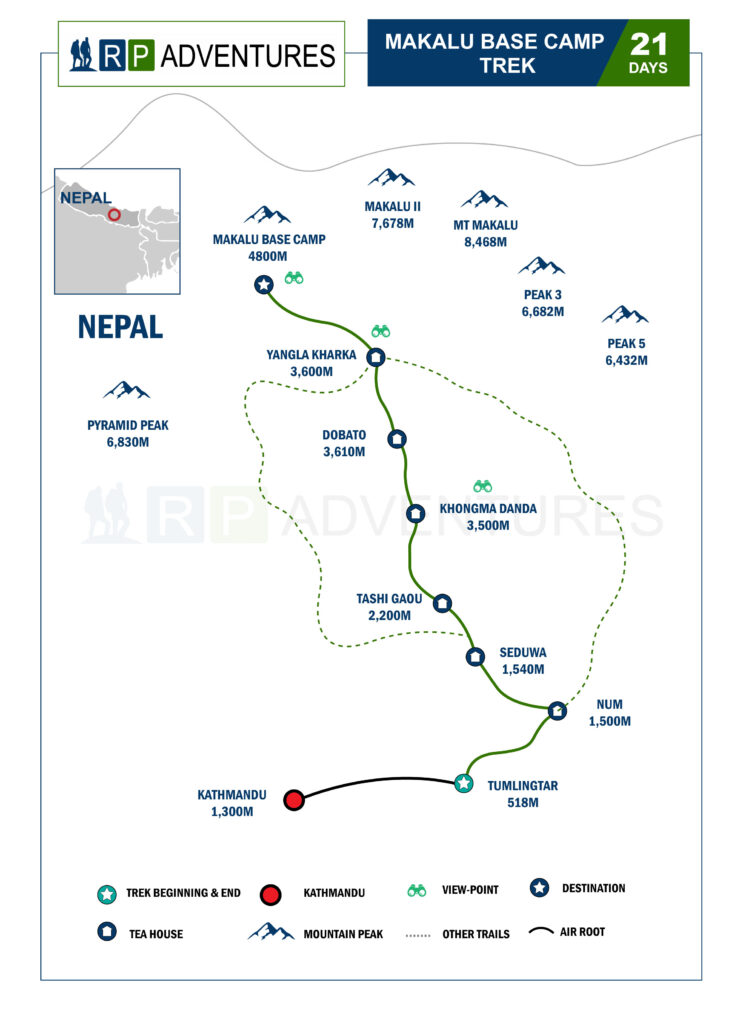
The trek passes through:
- Arun River Valley
- Makalu Barun National Park
- Barun Valley
- Glacier terrain
- Alpine landscapes
A reliable makalu base camp trek map is especially useful for understanding daily distances and acclimatization planning.
Exploring the Beautiful Barun Valley
The Barun Valley is one of the major highlights of the trek. Surrounded by steep cliffs, waterfalls, glaciers, and massive Himalayan peaks, the valley offers some of Nepal’s most dramatic mountain scenery.
This remote valley also plays an important role in the wider makalu circuit trek region, which connects multiple wilderness routes through eastern Nepal.
Trekkers often describe Barun Valley as one of the most untouched Himalayan landscapes in the country.
Essential Packing List for the Trek
Proper preparation is extremely important due to the trek’s remote nature.
Important items include:
- Down jacket
- Warm sleeping bag
- Trekking boots
- Thermal layers
- Waterproof jacket
- Gloves and hats
- Sunglasses
- Water purification tablets
- Trekking poles
- Personal first aid kit
Layered clothing is highly recommended because temperatures change significantly between lower villages and higher elevations.
Important Travel Tips
Train Before the Trek
Cardiovascular endurance and leg strength training can help significantly during long trekking days.
Carry Enough Cash
ATMs are unavailable in most trekking areas.
Respect Local Communities
The Makalu region contains traditional Himalayan villages where local customs remain important.
Expect Limited Connectivity
Internet and mobile networks are unreliable in remote sections of the trek.
Safety Information
The remote nature of the makalu trek itinerary makes safety preparation essential.
Common Trekking Risks
- Altitude sickness
- Weather changes
- Slippery trails
- Fatigue
- Remote evacuation difficulties
Safety Recommendations
- Trek with a guide
- Purchase travel insurance
- Carry basic medication
- Stay hydrated
- Avoid rushing the itinerary
Good preparation greatly reduces potential trekking risks.
Why the Makalu Base Camp Trek Is Worth It
The Makalu Base Camp Trek is not simply a mountain walk. It is a complete Himalayan wilderness experience that combines solitude, adventure, and extraordinary natural beauty.
While popular trekking regions continue to grow busier each year, the Makalu region still feels wild and unexplored. Trekkers experience quiet trails, authentic mountain culture, and dramatic landscapes without heavy tourism.
For travelers looking for a more adventurous and less commercial trekking route in Nepal, this journey offers one of the most rewarding experiences in the Himalayas.
Conclusion
The Makalu Base Camp Trek remains one of Nepal’s most remarkable remote trekking adventures. From lush forests and isolated villages to glaciers and towering Himalayan peaks, the journey offers incredible diversity and unforgettable scenery.
Although the trek demands strong preparation and physical endurance, the rewards are immense. Trekkers gain access to one of the country’s least crowded mountain regions while experiencing the raw beauty of eastern Nepal.
For those seeking a genuine Himalayan expedition beyond the mainstream trekking routes, the Makalu region stands as an extraordinary destination filled with adventure, challenge, and breathtaking mountain landscapes.
Frequently Asked Questions
How difficult is the Makalu Base Camp Trek?
The trek is considered challenging because of high altitude, long trekking days, and remote terrain.
What is the altitude of Makalu Base Camp?
The makalu base camp altitude is approximately 4,853 meters above sea level.
Is tea house accommodation available?
Yes, the route now supports a growing makalu base camp tea house trek experience, although facilities remain basic in remote areas.
Can beginners do the Makalu Trek?
The trek is better suited for trekkers with previous hiking or trekking experience.
What is the best season for Makalu trekking?
Spring and autumn are generally considered the best seasons due to stable weather and clear mountain views.
Do I need permits for the trek?
Yes, trekkers require permits including the Makalu Barun National Park Permit and other regional permits depending on the route.
Is solo trekking recommended?
A makalu base camp trek solo journey is possible but not generally recommended because of the remote conditions and limited rescue facilities.
Comments
Post a Comment